Beautifully Beyond
5 Lifestyle Changes That Can Make Your Skin Look Healthier
5 Lifestyle Changes That Can Make Your Skin Look Healthier
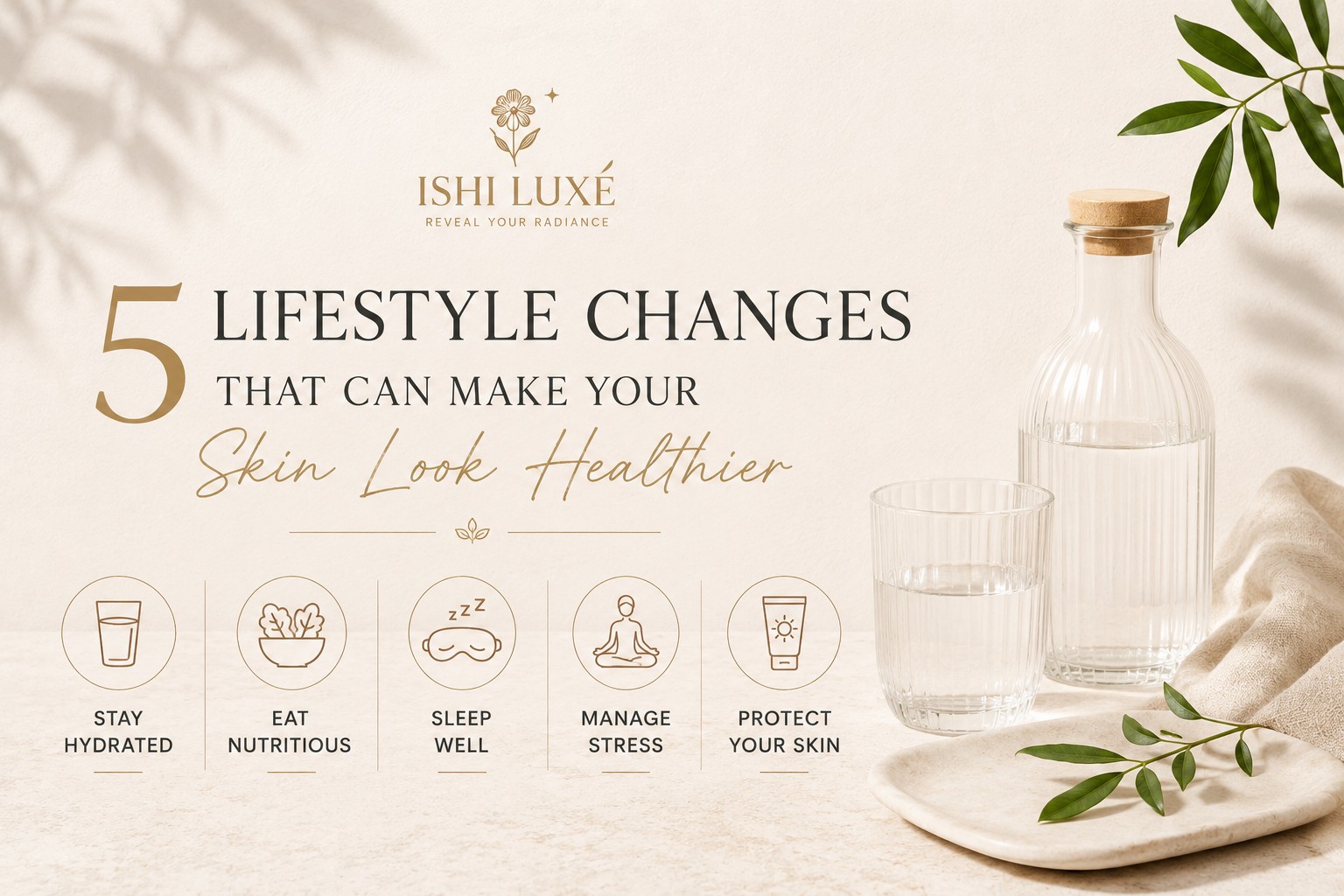
5 Lifestyle Changes That Can Make Your Skin Look Healthier
Here's a truth for anyone with a nine-step skincare routine and a nightly instant noodle habit: your serum is not going to out-perform your sleep schedule. Skincare products work on the surface. Lifestyle works underneath it. In circulation, hormone regulation, cellular repair and hydration at a level no topical product can fully substitute for.
This isn't a "throw out your skincare and just drink water" argument. It's the opposite. Your activities work better when the body underneath them is functioning well. Dermatology research increasingly backs this up, pointing to a set of lifestyle factors. Sleep, nutrition, movement and stress. That measurably affects skin health, independent of what's in your medicine cabinet.
Here are five changes worth taking and exactly why each one actually matters.
"Your skin is your body's organ. It's not separate from your health. It's a running commentary on it."
1. Sleep: The Original Overnight Repair Treatment
Sleep isn't downtime for your skin. It's peak repair time. During sleep, blood flow to the skin increases, growth hormone is released to support cell regeneration and collagen production ramps up.
Barrier repair accelerates. Skin cell turnover and repair processes are significantly more active overnight than during waking hours
Cortisol drops. Poor sleep keeps stress hormone levels elevated, which is directly linked to increased inflammation and breakouts
Under-eye circulation slows without it. Reduced blood flow during sleep deprivation is part of why dark circles and puffiness appear reliably after a bad night
Fun Fact
Poor sleep has been linked in research to visibly reduced skin barrier recovery. Meaning skin exposed to the exact same stressors (sun, pollution, dryness) heals measurably slower in sleep-deprived people than in well-rested ones.
How Much Sleep Actually Matters
Dermatology-aligned guidance points to 7–9 hours as the range where skins overnight repair processes function optimally. Consistency matters as much as duration. An irregular sleep schedule, even with occasional long nights, can disrupt the hormonal rhythms skin relies on for predictable repair.
2. Diet: Feeding Skin From the Inside Out
Your skin is active tissue. It needs real nutritional input to function well, not just topical hydration. A 2023 dermatology review specifically named nutrition as one of the core lifestyle pillars influencing long-term skin health alongside sleep, movement and stress.
Antioxidant-rich foods (berries, leafy greens, colorful vegetables) help combat stress from pollution and UV exposure
Healthy fats (omega-3s from fish, nuts, seeds) support the skin's lipid barrier, directly affecting hydration and elasticity
Protein provides the building blocks for collagen production, which skin relies on constantly to maintain firmness
Excess sugar and highly processed foods have been linked to increased inflammation and accelerated collagen breakdown via a process called glycation
Gut health connections are also increasingly studied. Fermented foods and fiber-rich diets that support a healthy gut microbiome have been associated with reduced systemic inflammation, which can indirectly benefit inflammatory skin concerns like acne and eczema
Skincare feeds your skin from the outside. Diet feeds the machinery that actually builds it.
3. Exercise: Circulation Is Underrated
Beyond the cardiovascular benefits, regular exercise has a direct measurable effect on skin, largely through improved blood flow.
Increased circulation delivers oxygen and nutrients to skin cells, supporting a naturally healthier-looking complexion
Research has linked regular exercise to improved skin structure, with some studies pointing to effects on mitochondrial activity within skin cells themselves. Essentially better cellular energy production
Sweating supports temporary detoxification of the skin's surface, though this benefit depends heavily on cleansing properly afterward to avoid clogged pores
Stress reduction from exercise compounds with skin benefits since exercise is one of the most effective accessible tools for managing the cortisol-driven breakouts covered next
Fun Fact
A scientific review of exercise and skin function found that regular physical activity was associated with elevated skin temperature and improved moisture levels. Meaning consistent movement may genuinely support skin hydration from within, not just skin appearance after a workout glow.
4. Stress Management: The Hormone Connection
Chronic stress doesn't just affect your mood. It directly disrupts skin function through the hormone cortisol, which the body releases in response to stress.
Elevated cortisol increases oil production, which's part of why stress-related breakouts are such a well-documented pattern
Chronic stress impairs the skin barrier, making skin more reactive, more prone to sensitivity and slower to heal
Inflammatory skin conditions. Including eczema, psoriasis and acne. Are frequently reported to flare during periods of sustained stress
The fix isn't eliminating stress entirely (unrealistic for most people) but building consistent outlets. Exercise, adequate sleep, hobbies or simply time outdoors. That helps regulate cortisol over time
Stress doesn't ask your skin's permission before it shows up on your face. But consistent stress management can meaningfully change how loudly it does.
5. Hydration: More Than Just Water Intake
Hydration works on two fronts. Water intake and the skin's own ability to retain moisture. And both matter for how skin actually looks and functions.
Internal hydration supports bodily function, which indirectly benefits skin, though drinking water alone won't fully substitute for a proper topical routine
Topical hydration (hyaluronic acid, ceramides) works directly at the skin's surface, where internal hydration alone can't always reach effectively
Environmental factors compound dehydration. Air conditioning, heating and low humidity all increase water loss from skin regardless of how much water you're drinking
A consistently hydrated barrier is more resilient to irritation, pollution and the visible effects of environmental stress covered in most of what damages skin day to day
Why These Five Don't Work in Isolation
Sleep, diet, exercise, stress and hydration aren't five separate boxes to check. They reinforce each other in ways that make addressing just one far less effective than addressing them together.
Poor sleep raises cortisol, which increases stress-driven breakouts. Meaning sleep and stress management are already tangled together, not separate problems
Exercise improves both circulation and stress regulation simultaneously, making it one of the most efficient single changes for skin if only one is possible right now
Dehydration is worsened by poor sleep and high stress, both of which affect the body's fluid regulation. So hydration efforts alone can only go so far without addressing the other two
A nutrient-poor diet can undermine the skin barrier just enough that even a solid topical routine struggles to keep up
This interconnection is exactly why a single "miracle" lifestyle change rarely delivers dramatic results alone. But a few modest improvements across categories often compound into something much more noticeable.
Busting the Myths
Myth 1: "Lifestyle changes are a less effective fix than good skincare products."
Reality: They work on different timelines and mechanisms. Skincare treats the surface; lifestyle supports the underlying systems that make skincare actually work better. Neither replaces the other; they're genuinely complementary.
Myth 2: "Drinking water is basically a skincare routine on its own."
Reality: Hydration matters. Its one piece of a much larger picture involving sleep, diet, stress and topical care. Water alone can't compensate for sleep deprivation or a consistently high-stress lifestyle.
Myth 3: "You need a lifestyle overhaul to see any skin benefit."
Reality: Research consistently points to sustained changes. Slightly better sleep consistency, more antioxidant-rich meals, regular movement. As genuinely impactful over time without requiring an all-or-nothing transformation.
Building These Into a Routine
Start with one, not five. Trying to overhaul sleep, diet, exercise, stress and hydration simultaneously rarely sticks. Pick the area you're furthest behind on and start there.
Track consistency, not perfection. An earlier bedtime four nights a week beats a perfect sleep schedule attempted for three days and abandoned.
Pair lifestyle changes with your existing skincare, not without it. These five factors support your routine's results; they don't replace the need for cleanser, moisturizer and sunscreen.
Give it time. Skin cell turnover takes weeks, not days. Most lifestyle-driven improvements in skin appearance become noticeable over a month or more of consistency not overnight.
Where Ishi Luxe Fits In
At Ishi Luxe, we've always believed skincare is one part of the picture. Our botanical-science formulations are built to support skin that's already doing its best to function well. Reinforcing barrier health, hydration and antioxidant defense so your lifestyle efforts and your skincare routine work together, not in isolation. No product, however well-formulated, can fully compensate for a body that isn't getting what it needs.
Because " Beyond" means caring for what's underneath the surface, not just what shows up in the mirror.
FAQs: Lifestyle Changes for Healthier Skin
Q1. Which lifestyle change makes the difference for skin health?
There isn't a universal answer. Sleep, diet, exercise, stress management and hydration all interact with skin function differently. For people, addressing whichever area is currently most neglected (often sleep or stress) tends to produce the most noticeable improvement.
Q2. How long does it take to see skin improvements from lifestyle changes?
Most people notice changes after several weeks to a month of consistency since skin cell turnover and repair processes take time to reflect improved sleep, nutrition or stress levels.
Q3. Can diet really affect acne and breakouts?
Yes, to some degree. Sugar and highly processed diets have been linked to increased inflammation, while antioxidant-rich balanced diets support skin's own repair and defense processes. Though diet is typically one factor, among several, not a standalone cure.
Q4. Does exercise actually improve skin? Is that just post-workout glow?
Both. The temporary post-workout flush is real. Research also links regular exercise to improve circulation, skin structure and moisture levels over time. Benefits that extend well beyond the immediate glow.
Q5. How does stress cause breakouts?
Chronic stress elevates cortisol, which increases oil production and can impair the skin barrier, making skin more reactive and prone to breakouts and sensitivity.
Q6. Is drinking water enough to fix dry or dull skin?
Not entirely. Internal hydration supports function but topical hydration (through ceramides, hyaluronic acid and proper moisturizing) addresses the skin barrier directly in a way water intake alone cannot fully replicate.
Q7. Do I need to change my lifestyle to see skin benefits?
No. Research consistently supports sustained changes. Even modest improvements in sleep consistency or diet quality. As genuinely effective over time without requiring a complete lifestyle overhaul.
The Bottom Line
Skincare products work on the surface. Sleep, diet, exercise, stress management and hydration work on the systems underneath it.. Both layers genuinely matter. You don't need to overhaul your life this week. Pick one, stay consistent and let your skincare routine do its job on a foundation that's actually supporting it.
Because the best skincare routine in the world still needs a body to work with.
Beautifully Beyond starts with taking care of what's underneath, not just what's visible.