Beautifully Beyond
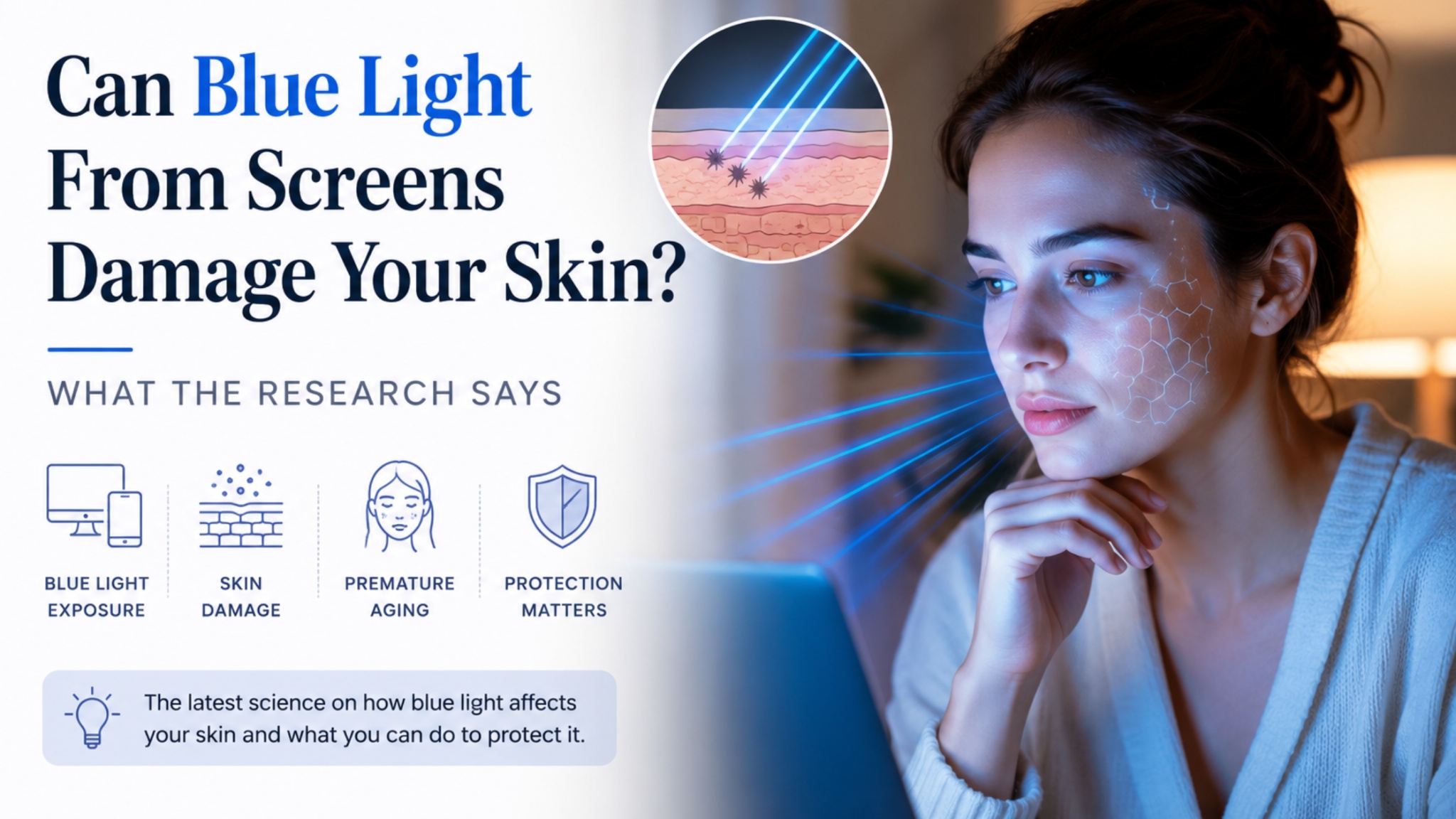
Can Blue Light From Screens Damage Your Skin? What the Research Says
Can Blue Light From Screens Damage Your Skin? What the Research Says
By Ishi Luxe - where science meets soul
Let's do some quick maths. The average Indian professional now spends 9 to 11 hours a day staring at a screen including laptop, phone, tablet, TV, sometimes all four in the same evening. Relatable right? And the time spent is even longer than most people sleep. Every hour you spend, your skin is quietly absorbing something you can't see, can't feel, and definitely never thought to apply SPF for.
We call it screen skin and it's the most under-discussed skincare problem of the decade. It doesn't announce itself the way a sunburn does. Instead, it shows up slowly: a dullness that foundation can't quite fix, a patchiness along the cheeks that wasn't there last year, a tightness by 6pm that no amount of water seems to solve.
"We spent years protecting our skin from the sun. The next frontier of skin science is protecting it from the screen." - Ishi Luxe Formulation Philosophy
What Is Blue Light Actually Doing to Your Skin?
Blue light, technically called High-Energy Visible (HEV) light, sits right next to UV light on the light spectrum, just slightly less energetic, but with one sneaky advantage: it penetrates deeper into the skin, reaching all the way to the dermis where collagen and elastin lives. HEV light slips past the surface almost unnoticed, working on the structural scaffolding of your skin while you're none the wiser, eyes fixed on a spreadsheet or a scroll feed.
The Three Ways Screens Age Your Skin
Oxidative stress: HEV light triggers free radical production in skin cells, accelerating the breakdown of collagen and the protein which is responsible for bounce and firmness. Over months of daily exposure, this is a slow, cumulative drain rather than a single dramatic event.
Pigmentation: Dermatology research has repeatedly shown that visible light is a stronger trigger for hyperpigmentation in melanin-rich skin than UV light alone which makes this especially relevant for Indian skin tones, where uneven tone often appears well before any fine lines do.
Barrier fatigue: Constant low-grade light + heat exposure from devices held close to the face dehydrates the skin barrier, leaving it dull, tight, and reactive. A compromised barrier also means every other concern like sensitivity, breakouts, dryness, all gets harder to manage.
Fun Fact: Unlike sunlight, blue light doesn't disappear indoors, on cloudy days, or after sunset. Your phone screen at 11pm in bed is still HEV exposure just in smaller, more frequent, more sneaky doses. Multiply that by years of late-night scrolling and the exposure adds up to far more than most people assume.
Why Botanical Skincare Is the Smartest Defence (Not Just the Prettiest One)
This is where most "screen damage" marketing gets lazy by only slapping "blue light protection" on a label without any real antioxidant backbone. True defence against HEV-induced oxidative stress requires botanical actives that are themselves natural antioxidants, lab-validated for potency, not just marketed for vibes. A pretty bottle and a trendy ingredient list mean very little if the actual concentration of active compounds is too low to do anything once it meets your skin barrier.
The Botanical Allies Worth Knowing
Green tea polyphenols (EGCG): One of the most studied plant antioxidants for neutralising light-induced free radicals, with a long track record in dermatological research.
Centella Asiatica (Gotu Kola): An Ayurvedic staple that calms inflammation and supports the skin barrier, making it especially useful for skin that feels reactive or "screen-tired.
"Turmeric (Curcumin): A heritage Indian botanical with proven anti-inflammatory and brightening properties, long used in households well before it became a skincare buzzword.
Bakuchiol: Nature's answer to retinol - supports collagen and cell turnover with a fraction of the irritation, making it far more forgiving for daily use.
Vitamin C-yielding botanicals (Amla, Citrus): Brighten, even tone, and reinforce the skin's own antioxidant reserves, working as a kind of daily top-up for your skin's natural defences.
"Beauty is not about reversing time, it is about honouring your becoming." - The Ishi Luxe Promise
A Botanical, Screen-Smart Skincare Ritual (That Actually Fits Your Day)
Morning: Build the Shield
1. Antioxidant-rich botanical serum - applied before anything else touches your skin.
2. Lightweight hydration to keep the barrier resilient through back-to-back meetings and the dry blast of office air conditioning.
3. SPF - Yes, even indoors, even on Zoom-only days, since most screens and indoor LED lighting still carry an HEV component.
Evening: Undo the Damage
1. Gentle cleanse to lift off the day's screen-time grime, sweat, and oil buildup without stripping the barrier further.
2. A plant-based, retinol-alternative active to support repair overnight, while your skin is naturally in renewal mode.
3. Rich, botanical moisture lock-in while your skin does its real renewal work between 10pm and 2am, when cellular repair peaks.
Weekly: Reset
1. A brightening botanical mask 1-2x a week to visibly counter dullness and uneven tone before it sets in long-term.
2. A 30-minute screen detox before bed (your skin and your sleep will thank you). Even this small window gives your skin a real break from constant HEV exposure.
How Blue Light Exposure Affects Indian Skin?
Melanin-rich skin is more reactive to visible light-induced pigmentation than fairer skin tones meaning the average Indian professional glued to screens all day is statistically more likely to see uneven tone and dark patches before fine lines. This is precisely why a natural anti-aging routine for Indian skin in their 30s needs to start with antioxidant defence, not just "anti-wrinkle" promises. Anti-aging conversations imported from skincare markets with fairer, less melanin-dense skin often miss this entirely, leading to routines that target the wrong concern first.
Fun Fact: The dandelion - Ishi Luxe's symbol of renewal thrives by adapting to harsh, untouched environments. It's a fitting metaphor: skin too needs formulas that help it adapt and recover from modern environmental stress, not just mask it.
Frequently Asked Questions
Is blue light from screens really bad for skin?
Yes, in a different way than UV light. HEV light penetrates deeper than UVB and has been linked to oxidative stress, weakened collagen, and pigmentation, especially in melanin-rich skin.
Can natural or botanical skincare actually protect against screen damage?
Botanical actives rich in polyphenols - green tea, turmeric, centella asiatica, vitamin C yielding plants neutralise the free radicals HEV light generates. Ishi Luxe botanical skincare products are lab-tested, clinically validated formulas make this more than a marketing claim.
What's the difference between blue light damage and sun damage?
Sun damage is strongest outdoors and mainly hits the outer skin layers. Screen-based blue light is lower energy but you're exposed for far longer, indoors, unprotected, reaching deeper into the dermis.
Is a plant-based serum strong enough to replace retinol?
Bakuchiol and similar botanicals support cell turnover and firmness with far less irritation than retinol making them ideal for daily, year-round use, including for sensitive Indian skin types.
How soon will I see results from Ishi Luxe botanical skincare?
Hydration, comfort, and a healthy-looking glow may become noticeable within 2–3 weeks of consistent use. Concerns such as uneven skin tone, pigmentation, and the visible effects of prolonged screen exposure typically require a full 6–8 week skin renewal cycle before more noticeable improvements appear. Ishi Luxe botanical skincare products work best when used consistently as part of a daily routine.
The Beautifully Beyond Takeaway
Your screen isn't going anywhere but neither should your glow. The fix isn't to fear technology, it's to give your skin the same intelligence it has always had: nature's, sharpened by science. That's the entire philosophy Ishi Luxe was built on heritage botanicals, lab-validated, for a woman evolving through every season of her life, screen-time included.
Your beauty is infinite. Your evolution is sacred. Your glow is yours to reclaim - Ishi Luxe, Beautifully Beyond