Beautifully Beyond
Niacinamide Benefits: Why Dermatologists Recommend It for Every Skin Type
Niacinamide Benefits: Why Dermatologists Recommend It for Every Skin Type
Niacinamide Benefits: Why Dermatologists Recommend It for Every Skin Type
If we were to compare skincare ingredients to people at a class reunion, retinol would be the person who's really good at everything and makes everyone else feel bad. Vitamin C would be the person who's perfect but gets upset if you look at them wrong. Then there is niacinamide. Niacinamide would be the person that everyone wants to sit with. It is gentle, dependable. Get along with everyone. The best part is that it actually works.
This is not an exaggeration. Niacinamide, which is a form of vitamin B3 is one of the ingredients that dermatologists recommend to everyone no matter what kind of skin they have. This is rare in the skincare world, where most ingredients are not good for certain skin types.
So what makes niacinamide so special? Let us break it down. We will look at the science, the myths and how to use it without wasting your money or irritating your skin.
Niacinamide does not fight your skin. Instead it helps to rebuild it. This is an important thing to know about skincare.
What Is Niacinamide?
Niacinamide is a form of vitamin B3 that can be found in food and used as a skincare ingredient. Your body cannot make enough of it on its own so you need to get it from sources. It is found in foods like fish, eggs and whole grains. It is also used in skincare products, where it is absorbed into the skin.
Unlike some skincare ingredients, niacinamide does not exfoliate or make your skin turn over faster. Instead, it helps to regulate how your skin works. It helps with things like oil production, skin strength, tone and inflammation.
A Quick History Lesson
Niacinamide was not originally used in skincare. It was first studied as a way to treat a disease called pellagra which is caused by a lack of vitamin B3. Over time doctors realized that it also had benefits for the skin.
The Core Benefits, Explained
Most articles just list the benefits of niacinamide but they do not explain what they mean. Here is what each benefit actually does for your skin:
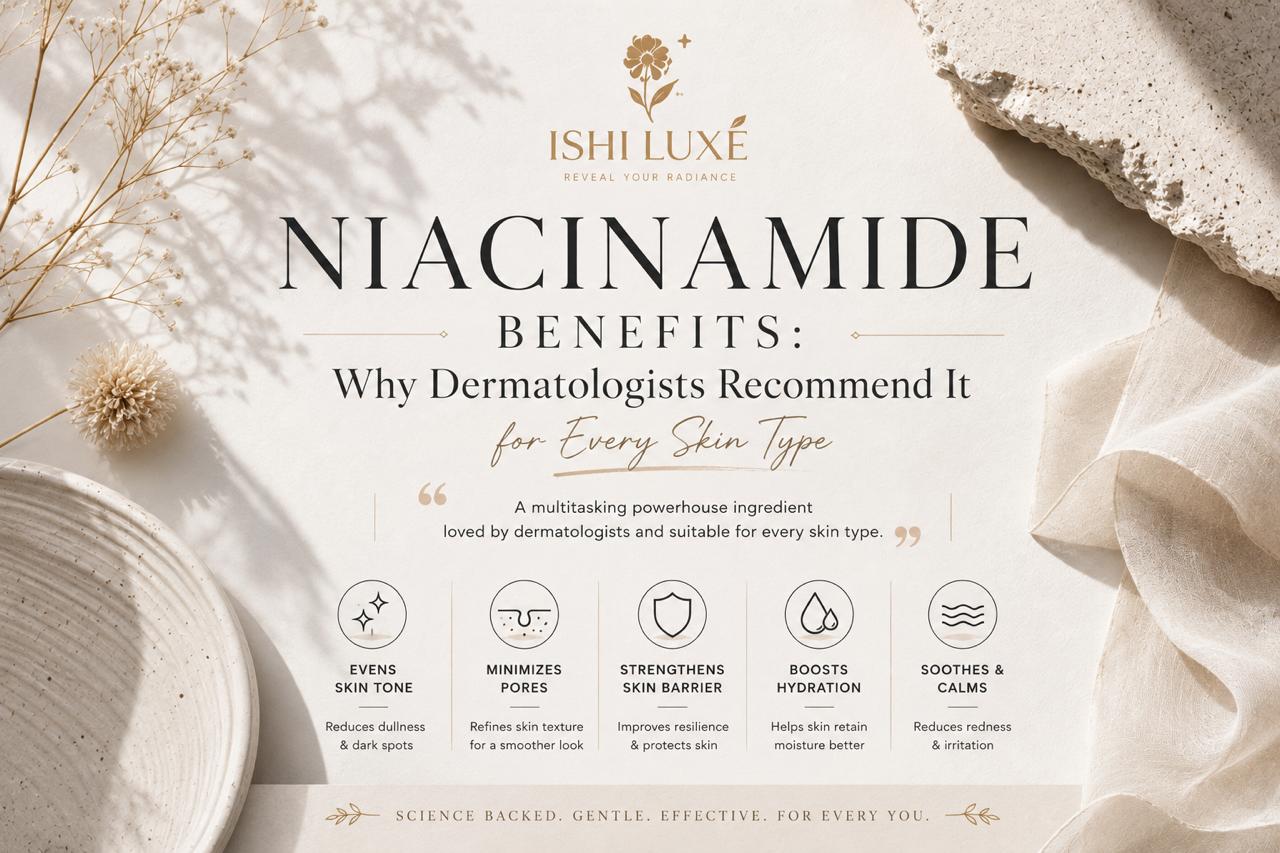
It helps to strengthen your skin barrier. This means that it helps your skin to keep moisture in and irritants out. This can help to reduce redness and sensitivity.
It helps to regulate oil production. This means that it can help to make oily skin less shiny and reduce the number of pores in acne-prone skin. It does this without drying out your skin.
It helps to fade discoloration and dark spots. It does this by stopping the transfer of pigment to the skin's surface.
It helps to calm redness and inflammation. This makes it a good ingredient for people with rosacea or reactive skin.
It helps to soften lines. It does this by supporting collagen production and improving the skin's barrier function.
It helps to minimize the look of pores. It does this by balancing oil production and improving skin texture.
Fun Fact
Niacinamide is one of the skincare ingredients that is considered to be truly multitasking. This means that it can do different things for your skin from repairing the barrier to regulating pigmentation. It is not a marketing term but is actually backed up by clinical research.
Why Dermatologists Recommend It for Every Skin Type
Skincare ingredients are not good for every skin type.. Niacinamide is different. It is good for all skin types, including dry, sensitive and acne-prone skin. Here is why:
For acne-prone skin it helps to balance oil production and calm breakouts.
For dehydrated skin it helps to strengthen the moisture barrier.
For reactive skin it is one of the most tolerated ingredients available.
For skin it helps to support collagen and elasticity.
The Percentage Question: How Much Niacinamide Do You Actually Need?
Most people think that more niacinamide is always better.. This is not true. The right amount of niacinamide for you will depend on your skin type and concerns. Here are some general guidelines:
2-5% niacinamide is a starting point for most people. This is especially true for beginners, skin and those who are focused on barrier repair and tone correction.
10% niacinamide is better for acne-prone skin that can tolerate stronger ingredients.
20% or more niacinamide is not necessary. Can even cause irritation.
The Litmus Test
If a product's percentage of niacinamide is more noticeable than its results that is a red flag. Consistency and the right dose are more important than a percentage.
Busting Niacinamide Myths
There are myths about niacinamide that need to be busted. Here are a few:
Myth: Higher percentages of niacinamide always work faster.
Reality: Most clinical improvement is seen with 2-5% niacinamide.
Myth: Niacinamide and vitamin C cannot be used together.
Reality: This is not true. Most dermatologists agree that they can be used together especially if you alternate them morning and night.
Myth: Niacinamide is too gentle to do anything.
Reality: Gentle does not mean weak. Niacinamide is effective and gentle which is why dermatologists trust it as a long-term ingredient.
How to Actually Use Niacinamide (Without Wasting It)
Here are some tips for using niacinamide:
Patch test it even though it is considered gentle.
Apply it after cleansing and before moisturizing.
Pair it thoughtfully with ingredients.
Be patient as visible results can take 4-8 weeks to appear.
Never skip sunscreen as niacinamide can help to fade discoloration but new sun damage can undo that progress.
What It Pairs Well With (and What to Watch)
Niacinamide is compatible with other ingredients. Here are a few examples:
Niacinamide and hyaluronic acid: This is a pairing that can help to lock in moisture.
Zinc: This is a combination for oily and acne-prone skin.
Vitamin C: This combination is generally safe especially if you use them at times of the day.
Retinol: This is a pairing that can help to offset some of retinols dryness and irritation.
FAQs: Niacinamide Benefits
Q1. What does niacinamide actually do for the skin?
Niacinamide strengthens the skin barrier, regulates oil production, calms inflammation, fades discoloration and supports collagen.
Q2. Is niacinamide good for skin?
Yes, niacinamide is one of the tolerated active ingredients available. It is often recommended as an entry point for people new to active skincare.
Q3. Is 5% or 10% niacinamide better?
Neither is universally better. 5% Niacinamide is a starting point for most people while 10% is better, for oily acne-prone skin that can tolerate stronger ingredients.
Q4. Can I use niacinamide with vitamin C or retinol?
The answer is yes, you can use niacinamide with vitamin C or retinol in stabilized formulas. A lot of people like to use vitamin C in the morning and niacinamide or retinol at night just because it's easier. They do this for simplicity not because there is any real problem with using them together.
Q5. How long does niacinamide take to show results?
You will start to see improvements in your skin tone, texture and oil control after using niacinamide for 4 to 8 weeks. It does not happen overnight. You have to use it every day for a while to see the difference.
Q6. Is niacinamide safe for melanin- skin?
Yes, it is safe. Niacinamide is actually very good for melanin- skin because it helps with pigment problems. It is a way to regulate skin color, which is why a lot of people like to use it instead of other brightening agents.
Q7. Can niacinamide cause irritation?
If you use too much niacinamide, some people might get a little red or feel a stinging sensation. This is sometimes called "niacinamide burn." To avoid this, you should start with an amount and see how your skin reacts.
Q8. Does eating foods that have niacinamide help my skin the way a serum does?
Eating foods like fish, eggs and legumes that have niacinamide is good for your health.. If you want to see real improvements in your skin, you should use a niacinamide serum. The serum puts the niacinamide right on your skin, where it can do good.
The Bottom Line
Niacinamide is a skincare ingredient that really works. It does not just work for some people it works for everyone no matter what kind of skin they have. Niacinamide is good because it works with your skin, not against it.
It does not promise to do miracles. It does a great job of helping your skin. To get the most out of niacinamide you should choose a percentage that's right, for you use it every day and protect your skin from the sun with SPF. Then you can just let niacinamide do its job. Beautiful skin starts with ingredients that really work, like niacinamide.
The Bottom Line
Niacinamide has earned its place as one of the most trusted skincare ingredients because it delivers consistent, science-backed results without overwhelming the skin. Whether your goal is to strengthen your skin barrier, reduce excess oil, fade post-acne marks, or achieve a healthier-looking complexion, it's an ingredient that fits into almost every skincare routine.
The key isn't choosing the highest percentage, it's choosing a well-formulated product and using it consistently alongside daily sun protection. Healthy skin is built through small, sustainable habits, and niacinamide is one of the easiest places to start.
At Ishi Luxe, we believe skincare should combine effective ingredients with thoughtful formulations that support your skin's natural balance. Rather than chasing trends, our approach focuses on science-backed activities that help you achieve healthy, radiant skin over time because true beauty begins with skin that feels as good as it looks.
Beautifully Beyond begins with ingredients that quietly deliver extraordinary results. — Ishi Luxe