Beautifully Beyond
Rosehip Oil for Skin Brightening: The Botanical Secret Backed by Science
Rosehip Oil for Skin Brightening: The Botanical Secret Backed by Science
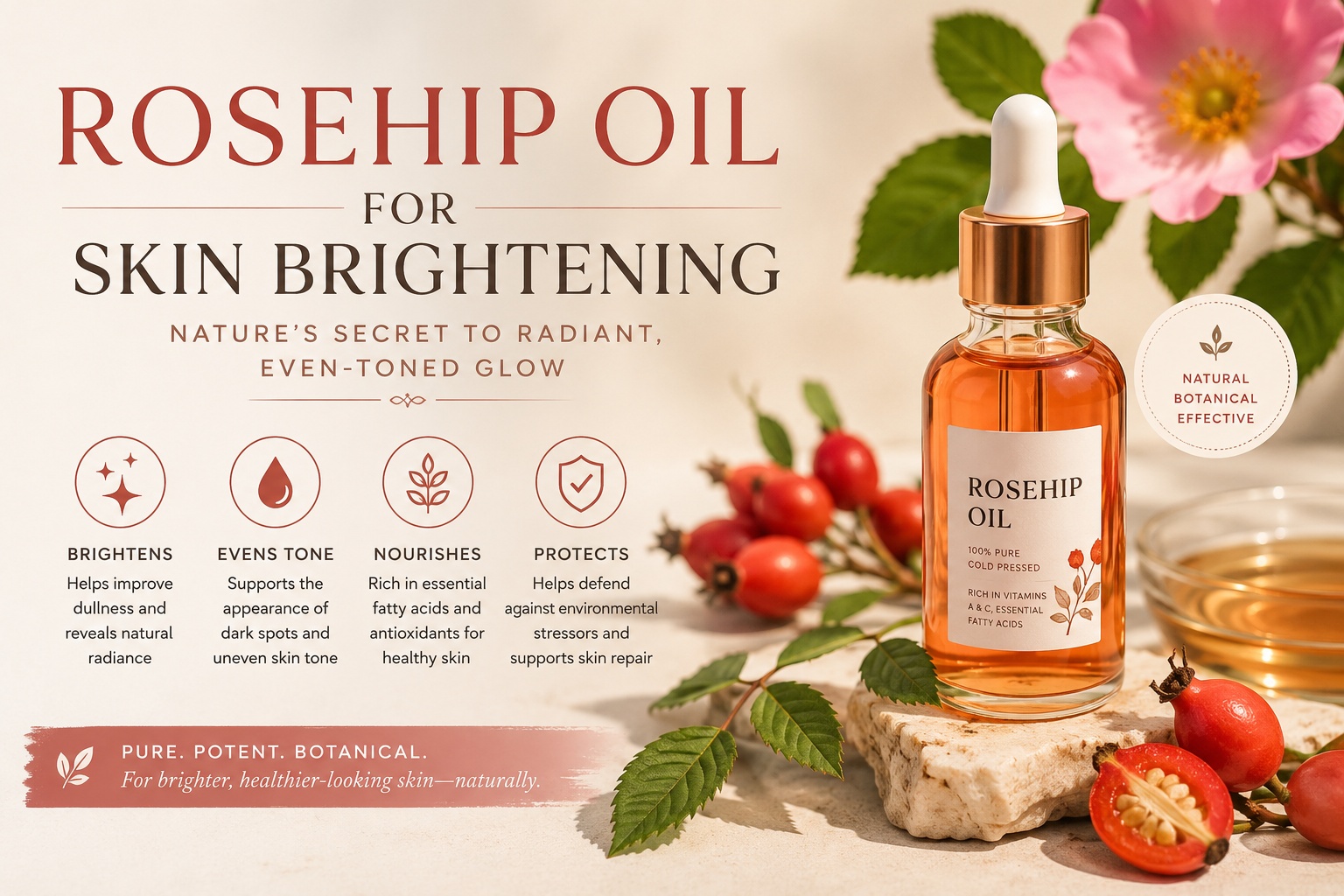
By Ishi Luxe — where science meets soul.
Somewhere between your grandmother's home remedies and a dermatologist's prescription pad sits a tiny, unassuming seed oil that's quietly become one of clean beauty's most talked-about brighteners i.e. rosehip oil. It's not new. It's not a trend randomly manufactured by a marketing team. It's a centuries old botanical that modern lab science has simply caught up with.
So what wonders rosehip oil actually doing for your skin, and is it actually worth the hype? Let's break it down layer by layer, the science, the myths, and the right way to use it.
"The best skincare wasn't invented. It was discovered in petals, seeds, and roots that have been quietly working for centuries." — Ishi Luxe Formulation Philosophy
What Is Botanical Skincare, Really?
Before diving into rosehip oil itself, it's important to understand a term that's often misunderstood: botanical skincare.
Unlike generic natural skincare, which simply implies an absence of synthetic ingredients, botanical skincare is built around plant derived actives , oils, extracts, and compounds from flowers, seeds, roots and leaves all chosen specifically for their functional benefits, not just their origin story.
A thoughtfully crafted botanical formula isn't just pure but every plant derived ingredient is chosen with the purpose to nourish, soothe, brighten, protect, or repair the skin. The value lies not just in its natural origin, but in its proven ability to deliver measurable results, supported by scientific research alongside centuries of traditional use.
Why This Distinction Matters
- Natural can mean almost anything - it's an unregulated term with no fixed standard.
- Botanical implies sourcing - plant-derived ingredients as the primary actives.
- Lab-tested botanical - the gold standard means these plant actives have been validated for potency, stability and real skin benefit.
What Is Rosehip Oil and Why Is It So Popular for Skin Brightening?
Rosehip oil is extracted through cold pressing the seeds found inside the rose plant's fruit. It's a small, vibrant rose hip that forms after the flower has bloomed and its petals have fallen. While it has been treasured in traditional beauty rituals across Europe and Central Asia for centuries, its growing popularity today is not merely related to its history.
Modern skincare research has highlighted its impressive nutritional profile, revealing a rich concentration of essential fatty acids, antioxidants, and vitamins that support skin repair, hydration, and a healthier looking complexion.
What's Actually Inside Rosehip Oil
1. Trans-retinoic acid (a natural vitamin A precursor): Supports the skin's natural renewal process, helping improve uneven skin tone and gradually reduce the appearance of pigmentation over the period. Thanks to its naturally occurring provitamin A compounds. Rosehip oil offers many of the skin renewing benefits associated with retinoids, making it a gentler, plant based option for those with sensitive skin or anyone seeking a more natural approach to skin renewal.
2. Vitamin C: A powerful antioxidant that helps brighten dull skin, reduce the appearance of uneven pigmentation, and support the skin's natural collagen production for a firmer, more radiant complexion.
3. Essential fatty acids (linoleic and linolenic acid): Strengthen the skin barrier and improve elasticity.
4. Lycopene and beta-carotene: Antioxidant carotenoids that help defend against environmental, free-radical damage.
Fun Fact: Rosehip oil has such a high concentration of natural vitamin A precursors that it's sometimes nicknamed "nature's retinol" minus the irritation, flaking and sun sensitivity that often comes with synthetic retinoids.
Rosehip Oil Benefits: Why It's a Skincare Favorite for Glowing Skin?
Rosehip oil is a perfect example of why plant based skincare has earned its credibility. The benefits of plant based skincare generally come down to three things: bioavailability, gentleness, and multi functionality.
1. Better Compatibility with Skin
Many plant oils, including rosehip, closely mimic the skin's own natural lipid structure, which means better absorption and less irritation compared to some synthetic alternatives.
2. Multi-Tasking Formulas
A single botanical ingredient often addresses several concerns simultaneously. Rosehip oil alone touches on brightening, hydration, antioxidant defence and barrier support four jobs, one ingredient.
3. Lower Irritation Risk for Sensitive Skin
Because the actives are delivered through a naturally balanced oil matrix rather than an isolated synthetic compound, plant based skincare tends to be gentler making it a strong option for sensitive or reactive skin types that can't tolerate harsher actives.
"Beauty is not about reversing time, it is about honouring your becoming." — The Ishi Luxe Promise
How to Use Rosehip Oil for Skin Brightening and Hydration?
Like any active ingredient, rosehip oil works best when used correctly. Here's a simple, dermatologist aligned approach.
Step-by-Step Application
1. Cleanse first. Apply rosehip oil to clean, slightly damp skin to help with absorption.
2. Apply lightweight serums before the oil. Water-based actives like vitamin C or hyaluronic acid should go on first. Oils are always the last step in a routine, as they seal everything underneath.
3. Use 3-4 drops. A little goes a long way. Warm the oil between your palms before pressing it gently into the skin.
4. Morning or night. Rosehip oil works either time, but if used in the morning, always follow with SPF, since natural retinoid content can increase sun sensitivity.
5. Patch test first. Even gentle botanical oils can cause reactions in some skin types. Test on your inner arm for 24 hours before applying to your face.
Common Mistakes to Avoid
Using too much: More oil doesn't mean faster results, it just risks clogging pores unnecessarily.
Skipping SPF: Pairing a vitamin A rich oil with unprotected sun exposure can undo your brightening progress.
Expecting overnight results: Brightening from rosehip oil follows the skin's natural renewal cycle. Patience is part of the process.
Can Rosehip Oil Help Reduce Hyperpigmentation? What Science Says
One of the most common reasons people search out rosehip oil is pigmentation like sunspots, post acne marks, melasma, or uneven tone. While no single botanical oil is a guaranteed fix for deep or stubborn pigmentation. Rosehip oil's combination of vitamin A precursors and antioxidants makes it a credible, gentle option for ongoing maintenance and prevention.
Natural Remedies for Hyperpigmentation Worth Pairing With Rosehip Oil
- Vitamin C serums: Layer underneath rosehip oil for a stronger combined brightening effect.
- Turmeric (Curcumin): A heritage Indian botanical with anti-inflammatory and brightening properties, useful for post acne marks.
- Licorice root extract: Known to help inhibit excess melanin production at the source.
- Consistent SPF: No brightening ingredient can outpace new pigmentation caused by unprotected sun exposure.
Fun Fact: Rosehip oil was famously used in a long term clinical study on surgical scars in the 1980s, where it showed a measurable improvement in scar appearance and skin tone over several months
Rosehip Oil in Your Skincare Routine: When and How to Use It?
A natural face oil for glowing skin works best as the final, sealing step of a layered routine, not a simple standalone solution. Here's how a simple, botanical forward routine might look:
Morning
1. Gentle cleanse
2. Antioxidant serum (vitamin C or similar botanical antioxidant)
3. Lightweight moisturizer
4. SPF, always last, always non-negotiable
Evening
1. Double cleanse to remove the day's buildup
2. Treatment serum, if targeting a specific concern like pigmentation
3. Moisturizer
4. Rosehip oil as the final seal, while skin repairs overnight
Reading the Label: Is Your Rosehip Oil Actually Good Quality?
Not all rosehip oils are created equal, and knowing how to read a skincare ingredient label is the difference between a genuinely effective bottle and an overpriced filler product.
What to Look For
Cold pressed, not solvent extracted: Cold pressing preserves more of the oil's natural vitamin A and C content while solvent extraction can degrade these actives.
Unrefined labeling: Always look for unrefined rosehip oil, as excessive pressing can reduce many of the naturally occurring nutrients, antioxidants, and fatty acids that contribute to its skincare benefits.
Dark glass packaging: Rosehip oil is sensitive to light and oxidizes quickly in clear bottles, losing potency before you've even opened it.
Short ingredient list: A genuinely botanical rosehip oil product should list the oil itself near the top, not buried under a long list of synthetic fillers and fragrance.
This is truly the heart of what separates pure botanical skincare from products simply riding the trend and it's a useful lens to apply to your entire shelf, not only for rosehip oil. The difference between organic and natural skincare matters here too. Organic refers to how the plant was grown (without synthetic pesticides or fertilizers), while Natural simply refers to the ingredient's origin. A product can be natural without being organic, and vice versa. Neither label alone guarantees efficacy without lab validation behind it.
Frequently Asked Questions
Does rosehip oil actually brighten skin, or is that a myth?
It's well supported, not a myth. Rosehip oil's natural vitamin A precursors, vitamin C, and essential fatty acids support cell turnover and even tone with consistent use.
How long does rosehip oil take to brighten skin?
Glow and hydration usually improve within 2-3 weeks. Pigmentation and dark spots typically take 6-8 weeks of consistent use, aligning with the skin's natural renewal cycle.
Can rosehip oil be used on acne prone or oily skin?
Yes, it's non comedogenic and lightweight, with a fatty acid profile similar to skin's natural sebum, making it suitable for oily and acne prone skin in the right amount.
What is botanical skincare and how is it different from regular natural skincare?
Botanical skincare uses plant derived actives like oils, extracts, flower and seed compounds as primary functional ingredients, focused on validated benefits rather than just being free of synthetics.
Should I apply rosehip oil before or after moisturizer?
After moisturizer, as your last step, seal in hydration and actives underneath. In the morning, always follow with SPF.
The Beautifully Beyond Takeaway
Rosehip oil is proof of something we believe deeply at Ishi Luxe: nature was never short on solutions, we just needed the science to catch up and validate them properly. A tiny seed, pressed correctly and used consistently, can do wonders for your glow compared to a cabinet full of synthetic promises ever could.
Ishi Luxe Botanical Skincare is backed by real formulation science. Ishi Luxe is built around a complete botanical skincare ritual - soap, serum, cream, and capsules. Each designed to complement the others. When used consistently for 6+ weeks, this layered approach helps support hydration, radiance, and overall skin health, allowing results to build naturally over time.
Your beauty is infinite. Your evolution is sacred. Sometimes, it begins with a single drop — Ishi Luxe Botanical Skincare, Beautifully Beyond
Visit www.ishiluxe.in
Follow ishiluxe.in