Beautifully Beyond
Serum versus Moisturizer: Do You Really Need Both of Them?
Serum versus Moisturizer: Do You Really Need Both of Them?
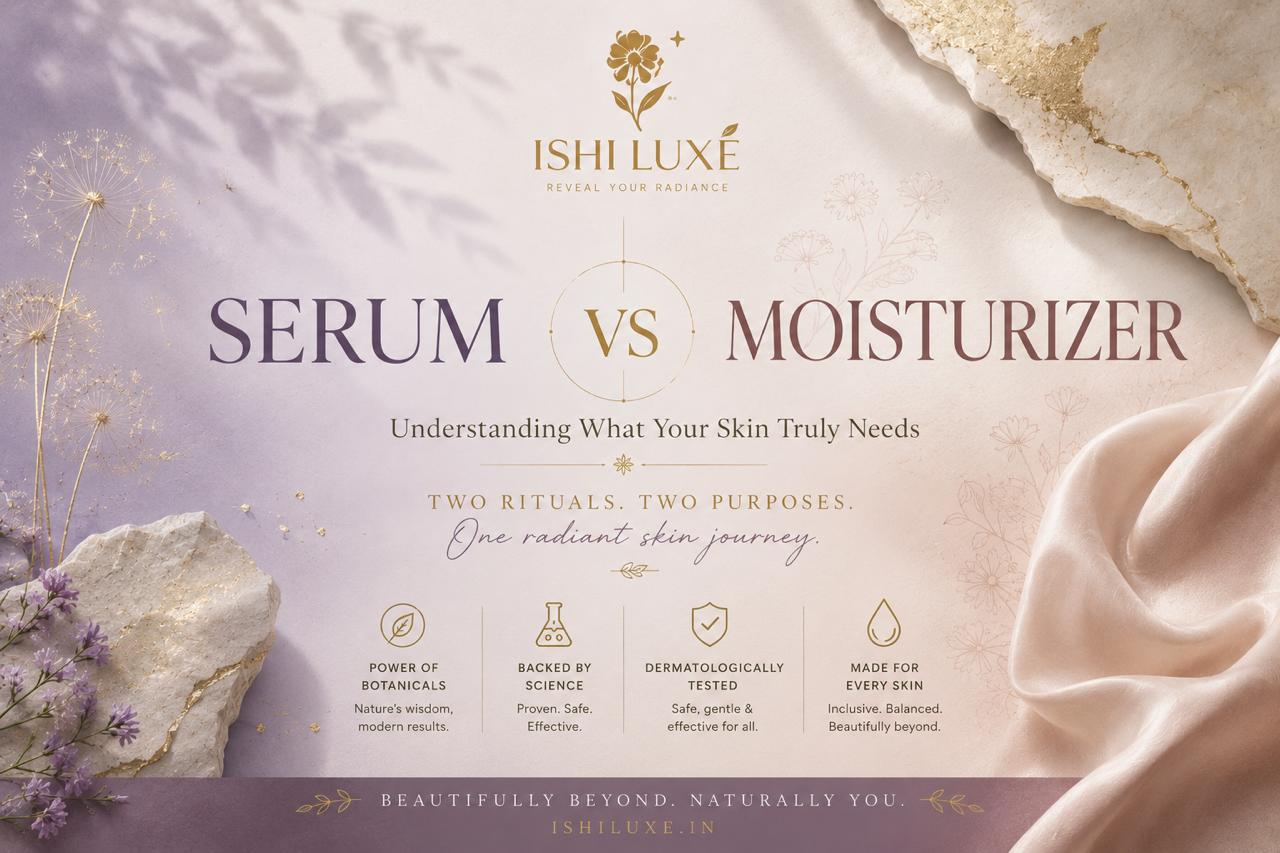
Serum versus Moisturizer: Do You Really Need Both of Them?
Every single person who takes care of their skin has been in this situation: you are holding a serum in one hand. A moisturizer in the other hand. Both of these products promise to keep your skin hydrated. Both of these products are a bit expensive. Both of these products have a similar texture when you actually squeeze them out. So the question that every honest person eventually asks is not "which one is better”. It is "do I really need both of these products or is someone just trying to sell me two products when one would be enough?"
This is a question.
Here is a fair answer: yes, in every case you need both a serum and a moisturizer. But not because using more products means you will have better skin. It is because serums and moisturizers are made to do two jobs and if you skip one of them, the other one will have to do extra work to make up for something it was never meant to fix.
Let us break down what each of these products does, when you can actually get away with skipping one, and how to build a routine that's not just about doing more steps for the sake of it.
A serum is used to treat your skin. A moisturizer is used to protect your skin. If you ask your skin to do both jobs with one product, it will not do either job well.
What a Serum Actually Does
A serum is a liquid that is full of good things like vitamin C, niacinamide, hyaluronic acid, peptides or botanical actives like centella asiatica. The molecules in a serum are small and the texture is thin so it can go into your skin instead of just sitting on the surface.
The job of a serum is to treat your skin in a way:
It can make your skin look brighter and more even
It can make fine lines look softer
It can calm down redness and inflammation
It can give your skin hydration at a deep level, not just on the surface
It can help with specific skin problems like acne marks, dullness, dehydration or sensitivity
What a Serum Does Not Do
Serums do not have thick ingredients like heavier oils, shea butter or waxes that lock moisture into your skin. This is not a thing. It is on purpose so the good things in the serum can get into your skin without being blocked.
What a Moisturizer Actually Does
A moisturizer is thicker. It is made with ingredients that sit on the surface of your skin and form a protective layer. The job of a moisturizer is not to treat a skin problem. It is to keep your skin hydrated and protected.
It locks in the water and good things that your serum just gave your skin
It stops moisture from evaporating off your skin all day
It makes the surface of your skin feel soft and smooth
It protects your skin from things in the environment like pollution, wind and dry air
Fun Fact
Your skin is always losing moisture to the air even when you do not notice it. A good moisturizer is not just hydration. It is the thing that decides whether the hydration your serum gave you stays in your skin or evaporates in an hour.
So Do You Really Need Both a Serum and a Moisturizer?
Here is an honest answer: it depends on what's in your serum and what your skin is like. Not a rule that applies to everyone.
If your serum is meant to treat your skin, like with vitamin C, niacinamide, retinol or exfoliating acids. Yes, you need a moisturizer. These things work better and are less irritating when you use a moisturizer after them.
If your serum is meant to moisturize your skin, like with acid. You might not need a separate moisturizer, especially if you have oily skin that is already balanced.
If you have oily skin that is not sensitive. You might be able to use just a lightweight serum and skip a heavy moisturizer, especially in hot and humid weather.
If you have dry, sensitive, old or skin that is being treated. Skipping a moisturizer is a mistake. Without it, your skin will have trouble keeping the things that the serum gave it and the serum might irritate your skin.
Skipping a moisturizer because your skin is already oily is like skipping a lid on a pot because the water is already boiling. The oil on your face at 3 pm is often because your skin is losing water, not because you do not need a moisturizer.
Do You Need a Moisturizer in Humid Weather?
This is one of the common questions about skincare in India. Humid weather does not mean your skin is automatically hydrated. It means the air has a lot of water in it, which is different from your skin keeping water inside.
The humidity in India can change a lot between seasons. Even in one day and this can disrupt your skin's barrier more than if the humidity was steady.
Skipping a moisturizer in this weather often makes things worse: your skin gets dehydrated and tells your oil glands to make oil so your skin looks oilier by midday. Not less.
The solution is not to skip this step. It is to change the texture of your moisturizer. A lightweight gel-based moisturizer with acid or niacinamide can give your skin hydration without feeling heavy or blocking pores.
Fun Fact
A study that tested a routine of just cleansing and moisturizing found that it reduced redness and improved skin texture in just four weeks. Sometimes the basic things are what really work.
Correct Order: Serum or Moisturizer First?
The answer to this is clear: serum first, moisturizer second.
Cleanse your skin to remove dirt, oil and residue so products can absorb
Apply a serum to clean, slightly damp skin so the good things can get in
Apply a moisturizer to lock in the serum and your skin's own moisture
Apply sunscreen in the morning to protect your skin
If you apply a moisturizer before a serum, it can block the serum from getting into your skin, which is a waste of the more expensive product.
A Simple Rule
Always go from thinnest to thickest. Start with watery textures and end with heavier, creamier textures. This is the way to remember the order of your skincare routine without memorizing a chart.
Matching Ingredients to Your Skin Problems
Choosing a serum and moisturizer should not be about buying what is popular. It should be about what your skin needs:
If you have dull skin and uneven tone. Use a serum with vitamin C or niacinamide and a lightweight non-greasy moisturizer.
If you have dehydrated skin. Use a serum with acid and a richer ceramide-based moisturizer to lock in hydration.
If you have acne and breakouts. Use a serum with niacinamide or salicylic acid and an oil-free, non-comedogenic moisturizer that will not clog pores.
If you have lines and aging skin. Use a serum with peptides or bakuchiol and a moisturizer rich in antioxidants and good lipids.
If you have sensitive skin. Use a calming serum with centella asiatica or licorice root and a fragrance-free minimal-ingredient moisturizer to avoid irritation.
The mistake people make is not skipping a step. It is using the ingredients for their skin problems and then blaming the serum or moisturizer for not working.
Building a Simple Skincare Routine
Not everyone. Needs a ten-step routine. Here is the minimum for skin types:
You must have a cleanser, moisturizer and sunscreen in the morning. This alone keeps your skin healthy.
Add a serum when you are treating a skin problem. One serum that targets your main concern, like pigmentation, hydration or aging.
Add another serum later if you need it. Once your skin is used to the one.
Do not feel guilty about keeping it more steps do not mean better skin. A simple, consistent routine with three or four steps will work better than a routine with ten steps.
Busting the Myths
Myth 1: "A good moisturizer makes a serum unnecessary."
Reality: Moisturizers are made for hydration and protection, not for treating skin problems. If you have skin problems like pigmentation, fine lines or acne marks, a serum is doing work that a moisturizer cannot do.
Myth 2: "Oily skin never needs a moisturizer."
Reality: Oily skin still loses water to the air like any skin type. Skipping a moisturizer can make your skin produce oil to compensate for dehydration, not less.
Myth 3: "More products mean results."
Reality: Using products does not mean you will get better results. It often just increases the risk of irritation, pilling or wasting product that does not get absorbed.
Where Ishi Luxe Fits In
At Ishi Luxe, we do not think skincare needs steps to be effective. It needs the right steps done well. Our philosophy is to use plant-based ingredients and dermatologically tested formulations, so whether your routine has three products or seven, each one is really working. Not just taking up space. A made serum and moisturizer used consistently and in the right order will always work better than a routine with many products and no thought.
Because "Beautifully Beyond" was never about how many products you have. It is about how well the products you choose really work together.
FAQs: Serum versus Moisturizer
Q1. Do I really need both a serum and a moisturizer?
For skin types, yes. A serum gives your skin targeted ingredients while a moisturizer locks that treatment in and prevents water loss. Together they do a job that neither can do alone.
Q2. Can I use serum without moisturizer?
People with oily skin or well-balanced skin can sometimes skip using a moisturizer, especially if they are using a serum that hydrates and moisturizes their skin. However, people with dry skin or sensitive skin or mature skin or skin that is being treated for some issue should not skip using a moisturizer.
Q3. Should serum or moisturizer go on first?
Serum should always be applied first to clean skin. Then moisturizer should be applied. This way the serum can absorb into the skin before the moisturizer forms a layer on top of it.
Q4. Do I need moisturizer if I live in a humid climate?
Yes, you still need to use a moisturizer. The humidity in the air does not mean that your skin is properly hydrated. In fact, the humidity can be uneven. Actually disrupt your skins barrier, making it more necessary to use a lightweight moisturizer.
Q5. What is the difference between a serum and a moisturizing serum?
A moisturizing serum is focused on hydrating the skin with hyaluronic acid rather than exfoliating or treating a specific skin concern like pigmentation. Sometimes a moisturizing serum can be used in place of a moisturizer but it is not a substitute for a serum that is designed to treat a specific skin concern.
Q6. Will using both a serum and moisturizer cause breakouts?
Not if you choose products that're right for your skin type and apply them correctly. Breakouts are usually caused by using products that clog pores or layering too many products at once, not just by using two products.
Q7. How many skincare steps do I actually need?
You need to use a cleanser, moisturizer and sunscreen at the least. You can also add one serum to your routine to target a skin concern. Any more than that and you should have a specific reason for adding each product.
The Bottom Line
It is not about serum versus moisturizer. They work together. One helps to treat the skin. The other helps to protect it, and skipping one means your skin has to work harder than it needs to. The best skincare routine is not the one with the steps but the one where each product has a specific job to do.
Use serum and moisturizer together; apply them in the order and be consistent. And your skin will be happy. Beautifully Beyond starts with getting the basics before adding anything else.