Beautifully Beyond
Why Smokers Often Have Dull, Uneven Skin Tone
Why Smokers Often Have Dull, Uneven Skin Tone
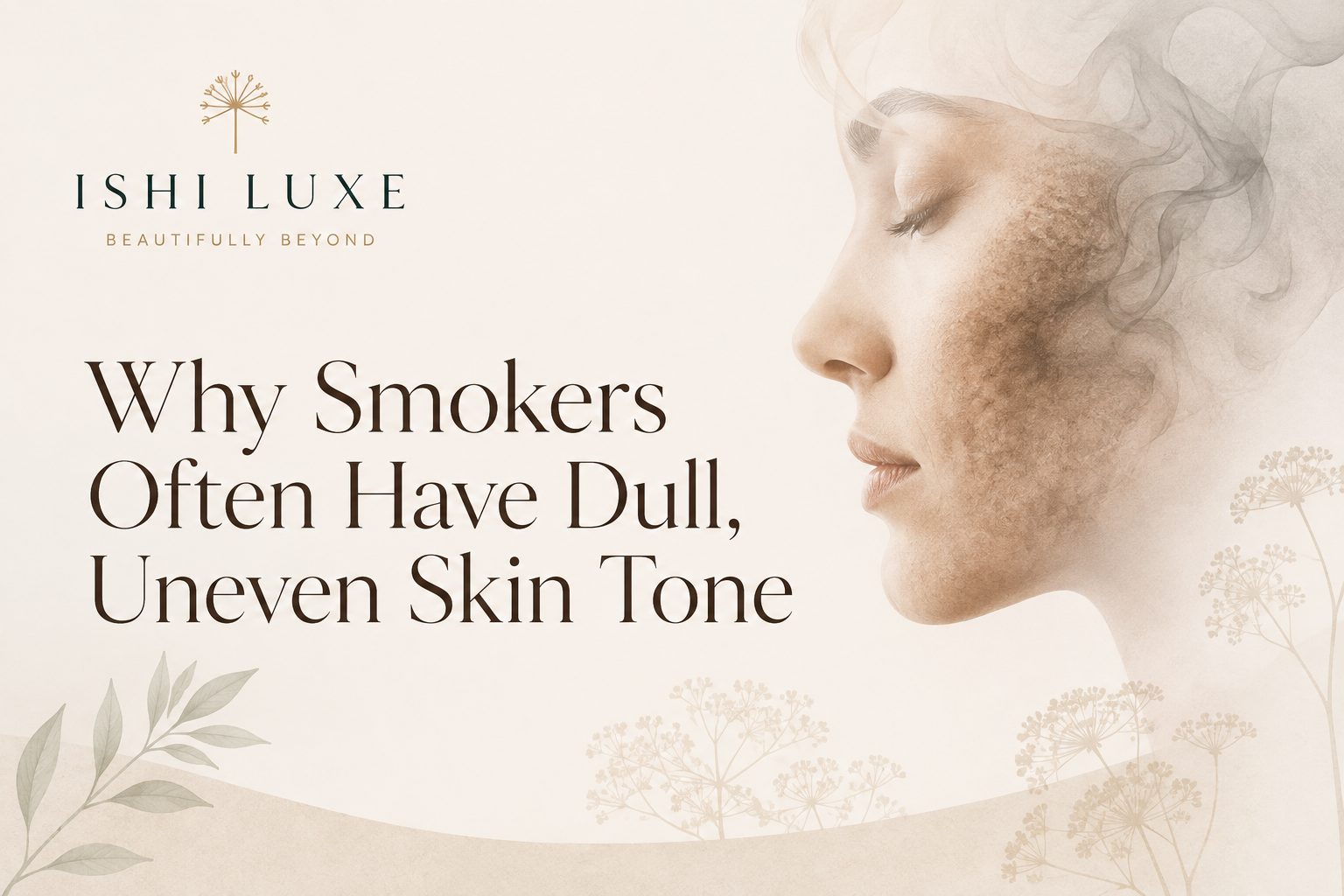
Why Smokers Often Have Dull, Uneven Skin Tone
You can often spot it before anything not the wrinkles, not the fine lines around the mouth but the tone itself. A greyish undertone. Patchy discoloration across the cheeks. Skin that looks tired after a full night's sleep. Dermatologists have a name for this pattern and it shows up in smokers with striking consistency.
Here's what's interesting: this isn't vague "smoking is bad for you" skin damage. It's a well-understood chain of chemistry. Carbon monoxide, restricted blood flow and overactive pigment cells. Each playing a distinct role in why smokers' skin so often looks dull and uneven at the same time rather than just older.
Let's actually break down the mechanism because understanding why it happens changes what you can do about it. Brightening serums alone won't fix an oxygen supply problem and quitting alone won't instantly erase pigment that's already formed. Knowing which mechanism is driving your tone concern is what actually determines the right fix.
"Dull and uneven aren't the problem wearing two names. One is about how light your skin reflects. The other is about where your pigment cells decided to overreact."
The Real Culprit: It's Not Just "Smoker's Skin”. It's Chemistry
Carbon Monoxide Steals Your Skin's Oxygen
Every cigarette introduces carbon monoxide into the bloodstream. And carbon monoxide binds to hemoglobin (the molecule that carries oxygen in blood) more readily than oxygen does. The result: less oxygen actually reaches skin tissue even though blood is still circulating normally.
Oxygen-starved skin loses its pinkish undertone, which is part of what gives healthy skin its glow
This shows up as a pale, greyish or sallow complexion. Often the very first visible sign people notice
Unlike a suntan or flush, this dullness doesn't fade with rest because the underlying oxygen supply is chemically restricted, not just temporarily reduced
Nicotine Narrows Blood Vessels
On top of the oxygen problem, nicotine causes vasoconstriction. A narrowing of the small blood vessels that supply skin with nutrients. Less blood flow means nutrients delivered to skin cells are reduced, limiting their ability to repair, regenerate, and maintain even color.
Reduced circulation is part of why smokers notice slower healing and more visible scarring
Skin cells operating on a nutrient deficit can't maintain consistent pigment regulation, contributing to blotchiness
This effect compounds with every cigarette. It isn't a one-time dip but a repeated cumulative strain on circulation
Fun Fact
Carbon monoxide binds to hemoglobin roughly 200 times more strongly than oxygen does. That means even a small amount circulating in the blood can meaningfully crowd out oxygen delivery, which is exactly why the dullness associated with smoking shows up so consistently even in otherwise healthy people.
Why Tone Not Just Wrinkles
Most people associate smoking with wrinkles first.. Tone and texture changes are just as characteristic. And they come from a different mechanism entirely.
Melanocyte Overactivation
Smoking has been shown to stimulate melanocytes. The cells for producing melanin, the pigment that determines skin color. Combined with the stress smoking generates, this can trigger overproduction of melanin in patches rather than evenly across the skin.
This uneven melanin production is what creates dark spots, blotchy patches and an overall uneven complexion
Areas with thinner skin or more sun exposure. Cheeks around the mouth, backs of hands. Often show this discoloration most visibly
Dermatologists sometimes refer to this pattern of smoking-related pigmentation as "smoker's melanosis”. A recognized, documented form of discoloration linked specifically to tobacco use
Dark, Discolored Lips
One of the more specific, often overlooked signs is darkening of the lips. A common indicator of long-term tobacco exposure, driven by the same combination of reduced blood flow and localized pigment changes affecting the delicate lip skin.
Texture Changes Affect How Light Reflects
Dullness isn't about pigment. It's also about texture. Smoking has been linked to a skin surface partly from a buildup of dead skin cells and partly from slower cell turnover due to reduced circulation. Rough, uneven texture scatters light, reflecting it unevenly, which is a major reason skin can look "dull" even independent of its actual pigment.
Two different problems wear the word. Grey oxygen-starved skin is a circulation issue. Blotchy, patchy skin is an issue. Smoking causes both. Simultaneously.
Grey vs. Uneven: Two Distinct Tone Problems
It's worth separating these because they respond to different approaches:
The "grey/dull" problem. Driven mainly by oxygen deprivation and poor circulation. Improves as blood flow and oxygen delivery normalize. This begins quickly after reducing or quitting smoking.
The "patchy/uneven" problem. Driven by melanocyte overactivation and localized pigment buildup. Improves gradually, often benefiting from targeted brightening actives alongside reduced smoking since existing pigment needs time (and sometimes active ingredients) to fade.
Recognizing which one is more dominant in your skin can help set realistic expectations. The greyish dullness tends to respond faster than deep localized pigmentation.
Fun Fact
Research has found that smokers can appear, on average, over a year older than non-smokers of the same age. A gap driven largely by this combination of dulled circulation and uneven pigmentation, not just wrinkles.
What Makes Tone Damage More Severe in Some Smokers Than Others
Not every smoker develops the degree of dullness or unevenness. Several factors influence how visible this damage becomes:
Duration and frequency. Both the number of years smoking and the number of cigarettes per day have a cumulative effect on circulation and pigment changes; damage compounds rather than resetting between cigarettes.
Sun exposure overlap. Since UV exposure and smoking both drive melanocyte activity, smokers who also spend time in the sun without protection tend to show more pronounced, faster-developing pigmentation.
Skin tone and melanin-rich skin. Melanin-rich skin tends to be more reactive to inflammation-triggered pigment changes, meaning smoking-related discoloration can appear pronounced and take longer to fade in deeper skin tones.
Existing skin conditions. Pre-existing sensitivity, rosacea, or barrier issues can make skin more reactive to the stress and circulation changes smoking causes, amplifying visible tone changes.
Hydration and skincare habits. A hydrating barrier-supportive routine can partially offset how visibly dullness and texture changes show up even without addressing the smoking itself.
This variability is also why two people who smoke the same amount can show noticeably different degrees of visible tone change. Genetics, sun exposure and skincare habits all interact with the same underlying chemistry.
Busting the Myths
Myth 1: "Dull skin from smoking just means I need sleep."
Reality: While sleep genuinely affects skin appearance, smoking-related dullness is driven by restricted oxygen delivery. A problem that persists regardless of how well-rested you are until circulation itself improves.
Myth 2: "Uneven tone from smoking is basically the same as sun damage."
Reality: Sun-driven pigmentation and smoking-driven pigmentation share some mechanisms (both involve stress and melanocyte activity) but smoking adds a circulation-restriction layer that sun exposure alone doesn't cause. Which is why smokers often show both grey dullness and patchy tone together.
Myth 3: "Once you have tone from smoking, brightening products won't help."
Reality: Targeted actives like niacinamide and vitamin C can meaningfully fade existing discoloration by interrupting melanin transfer and supporting cell turnover. They work best combined with smoking but they're far from useless on their own.
What Actually Helps
Since the two problems have roots, addressing tone properly means targeting both:
For circulation-driven dullness. Reducing or quitting smoking remains the single most effective step since it directly restores oxygen delivery to skin. Gentle massage and antioxidant serums can support circulation and oxidative stress in the meantime.
For pigment-driven unevenness. Niacinamide and vitamin C both help interrupt melanin transfer to the skin's surface, gradually fading discoloration with consistent use.
For texture-driven dullness. Gentle, consistent exfoliation (not scrubbing) supports healthier cell turnover, helping skin reflect light more evenly.
For all three. Daily sunscreen is essential since UV exposure compounds both the pigmentation and oxidative stress smoking already causes.
For a step-by-step recovery routine covering hydration, barrier repair and antioxidant defense, this pairs directly with our companion guide on repairing skin damaged by smoking and alcohol.
Where Ishi Luxe Fits In
At Ishi Luxe, we believe understanding why skin looks the way it does matters as much as what you put on it. Our botanical-science formulations pair brightening, pigment-regulating actives with defense and barrier support. Because tone correction isn't a single-step fix, it's addressing circulation, pigment and texture together the way skin actually experiences the damage in the first place.
Because " Beyond" means treating the actual cause, not just covering the surface.
FAQs: Smoking and Uneven Skin Tone
Q1. Why does smoking specifically cause skin, not just wrinkles?
Smoking introduces carbon monoxide, which binds to hemoglobin more readily than oxygen, reducing oxygen delivery to skin tissue. This shows up as a greyish complexion. A distinct effect from the collagen breakdown that causes wrinkles.
Q2. What is "smoker's melanosis"?
It's a recognized pattern of pigmentation linked specifically to tobacco use, in which melanocyte overactivation leads to uneven dark discoloration on the skin, often most visible on the cheeks and around the mouth.
Q3. Does smoking really cause spots and hyperpigmentation?
Yes. Smoking has been shown to stimulate melanocytes and increase stress, both of which contribute to overproduction of melanin in patches. Resulting in visible dark spots and uneven tone over time.
Q4. Can uneven skin tone that comes from smoking actually be fixed?
Yes, to a degree. Circulation-related dullness often gets better when smoking is cut down or stopped completely. Pigment-related unevenness works with brightening ingredients like niacinamide and vitamin C as long as they are used regularly.
Q5. Why do smokers often have lips?
Dark lips are a well-known sign of long-term tobacco use. This happens because of the mix of poor blood flow and color changes in the skin that affect the face. The lips are a sensitive area, so the effect is more noticeable.
Q6. Is skin from smoking the same as dull skin from not getting enough sleep?
No. Not getting sleep makes skin dull for a short time and it gets better when someone rests. Dullness from smoking is caused by less oxygen getting to the skin because of chemicals. This problem stays until circulation improves.
Q7. How long does it take for skin tone to get better after quitting smoking?
Dullness from circulation can start to get within weeks as oxygen flow returns to normal. Deeper color changes from much pigment production usually take longer. Using brightening ingredients can help along with quitting smoking.
The Bottom Line
Dull and uneven skin tone in smokers is not one issue. It is at least three problems all happening together: poor blood circulation that starves the skin of oxygen, pigment cells that are too active and a rougher texture on the skin's surface. Knowing which one is causing the specific tone problem in your skin is the difference between trying solutions and actually fixing the real cause.
Reduce the cause, treat the pigment and help the texture. And let your skin's natural color slowly come back.
Beautifully Beyond starts with understanding what your skin is actually telling you.